Udit Gupta
Assistant Professor
Cornell Tech
[ECE]
[CSL]
[Jacobs Technion-Cornell Institute]
[Atkinson Center for Sustainability]

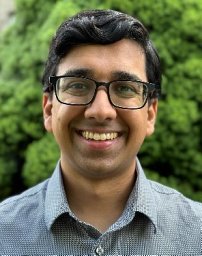
I am an Assistant Professor in the Department of Electrical and Computer Engineering at Cornell Tech. My research interests lie at the intersection of computer architecture, systems, machine learning and environmental sustainability. The central theme to my research is co-designing solutions across the computing stack (applications, algorithms, systems and architecture, circuits and devices) to design and implement computer systems and hardware in new ways to improve the performance, efficiency, and environmental sustainability of emerging applications. I lead the S4AI group, working on Specialized, Scalable, and Sustainable Systems for AI.
Through research, I am driven to realizing practical impact, building interdisciplinary research communities, and pathfinding. I led the characterization of industry scale neural personalized recommendation models, outlining paths for future AI hardware design and academic research into specialized systems for AI. Based on the key insights we built open-source systems' benchmarks and tools that have been standardized as part of the community efforts such as MLPerf. I also built the first architectural model of computing's embodied carbon (ACT), which industry now uses to account for the manufacturing footprint of data center hardware.
My current work argues that AI's rapidly growing energy and environmental footprint, often framed as a modeling problem or a grid problem, is at its core a systems problem — and that the largest levers lie in how we characterize, serve, and provision AI infrastructure. Characterization comes first: emerging agentic AI workloads compose many models and tools into multi-step pipelines, so the cost of a task is set by how that pipeline is assembled and served rather than by model size alone, and careful measurement becomes a prerequisite for efficient design. Building on what characterization exposes, we co-design algorithms, systems, and hardware to remove the resulting overhead, and we are rethinking the contract between AI services and the power grid so that data centers can become flexible participants in the grid rather than inflexible loads. Finally, stepping back from operational energy to the full hardware life cycle, where manufacturing increasingly dominates computing's carbon footprint, my research treats environmental impact as a first-order design principle across the computing stack. This work is conducted with industry and government partners including Meta, Microsoft, NVIDIA, and the U.S. Department of Energy.
Honors/Awards: My work has been featured in venues such as Bloomberg Green, The Guardian, and CNBC. I have advised the German Federal Ministry for the Environment (BMUKN) on sustainable AI policy. My research has received an Amazon Research Award (2026), Google's ML and Systems Junior Faculty Award (2025), and Google's Academic Research Award (2024). My work has been awarded an IEEE MICRO Top Picks (2022 and 2023) and IEEE MICRO Top Picks Honorable Mention (2021), as well as received Best Paper Nominations at the Parallel Architectures and Compilation Techniques (PACT 2019) and Design Automation Conference (DAC 2018). My dissertation received the SIGARCH Outstanding Ph.D. Dissertation Honorable Mention in 2023 as well as the MICRO Outstanding Ph.D. Dissertation Honorable Mention in 2023. I received my Ph.D. in Computer Science at Harvard University and BSc in Electrical and Computer Engineering from Cornell University.
Prospective students: I am actively looking for motivated, ambitious, and passionate graduate students, postdoctoral scholars, and undergraduate. If you are interested in working with me please read the following page.
Research Interests
My current research interests include:
- Sustainable computing: accounting, modeling, and environmental impact aware design, spanning the full hardware life cycle from fabrication to reuse.
- Specialized systems and hardware for Agentic AI: characterizing agentic workloads and co-designing serving systems, disaggregated hardware, and automated optimization to make them efficient at-scale.
- Grid-interactive AI infrastructure: making data centers flexible citizens of the power grid, with latency contracts and guarantees that hold from the grid down to the GPU.
- Edge AI: energy efficient on-device and embodied AI for robots, sensors, and resource constrained devices.
News
- Oct. 2026Received gift from Meta ($20K) towards Enabling AI Native Technology Transfer for Silicon and Systems Research
- Oct. 2026Gave a talk on AI’s Energy Problem Is a Systems Problem: Characterization, Serving, and the Hardware Life Cycle and spoke on the Environmental Impacts of AI panel at the Community-Centered AI Infrastructure Summit at Carnegie Mellon University
- Sep. 2026👋 Welcome Jared Fernandez, joining our lab as a post-doc!
- Aug. 2026👋 Welcome Mukul Ranjan and Yiwei Jiang, joining our lab as first year PhD students!
- Jul. 2026📄 Our review paper, "Strategies and design for increasing AI sustainability", is published in Nature Reviews Clean Technology!
- Jun. 2026📄 A Greener Edge, our framework on carbon-aware edge ML system design, is published at MobiSys 2026! Congratulations to Xuesi Chen and all co-authors!
- May 2026🎉 Michael Shen is recognized as an ML and Systems Rising Star! Congratulations Michael! 🎉
- Apr. 2026🎉 Xuesi Chen is recognized as a MobiSys Rising Star! Congratulations Xuesi! 🎉
- Apr. 2026📄 Our policy report, ``Towards a Sustainable and Competitive AI Economy'', with recommendations to the German Federal Environment Ministry is published!
- Apr. 2026📄 Beyond Prediction, our paper on tail-aware scheduling for LLM inference, is published at ICML 2026! Congratulations to Yueying Li and all co-authors!
- Mar. 2026Received an Amazon Research Award (Sustainability) on ``Agent-Driven Life Cycle Carbon Optimization for Sustainable Edge Devices'' ($50K + $40K AWS credits)
- Jan. 2026📄 FlashDLM paper on accelerating Diffusion Language Model inference accepted to ICLR 2026! Congratulations to Zhanqiu Hu, Jian Meng and all co-authors!
- Nov. 2025Received grant from Cornell's Atkinson Center on ``The Green Choice: Enabling Sustainable Generative AI through Flexible System Co-Design'' ($25K)
- Nov. 2025📄 Our paper, COFFEE (Carbon-Modeling and Optimization Framework for HZO-based FeFET eNVMs) is accepted to DATE 2026! Congratulatios Hongbang and Xuesi!
- Aug. 2025👋 Welcome Xuesi Chen to our lab!
- Jun. 2025Received Google's ML and Systems Junior Faculty Award ($100K)
- Jun. 2025📄 Two papers, Carbon Clarity and EpiCarbon, accepted to ICCAD 2025! Congratulations to Xuesi Chen, Farbin Fayza, and all co-authors!
- Nov. 2024Received Google's Academic Research Award (GARA) on ``Life Cycle Carbon Footprint of AI Inference'' ($100K)
- Oct. 2024📄 Paper on energy-/carbon-aware optimization of 3D IC's published at JXCDC. Congratulations to Hyung Joon Boon
Show earlier news Hide earlier news
- Sep. 2024📄 Paper on architectural evaluation of 3D IC's published at ISLPED. Congratulations to Hyung Joon Boon
- Aug. 2024👋 Welcome Tanmaey Gupta to our lab!
- Jun. 2024📄 Three papers accepted to HotCarbon workshop! Come see our work on sustainable computing. Congratulations to Leo Han, Anvita Bhagvatula, Yueying Li, Jash Kakadia, and Omer Graif!
- Jun. 2024Served on the HotCarbon program committee.
- May 2024Received an NSF Expeditions grant with Harvard University, University of Pennsylvania, Ohio State, and Yale ($12M total), for Carbon Connect: An Ecosystem for Sustianable Computing
- Apr. 2024Attended and scribed at the NSF Workshop for Sustainable Computing for Sustainability
- Mar. 2024Served on the ISCA 2024 program committee
- Feb. 2024Launched the second iteration of the ML Sys Rising Stars workshop 2024!
- Nov. 2023Received the IEEE MICRO Outstanding Dissertation Award Honorable mention
- Oct. 2023Received an NSF grant ($2M) with Geogia Tech and Harvard Unviersity for Life-time aware design for sustainable edge devices
- Sept. 2023Received gift from Google ($30K) towards investigating Understanding and Mitigating the Environmental Footprint of AI At Scale
- Sept. 2023Received our first NSF grant ($300K) to develop, Cloud Infrastructures for Designing Sustainable Electronics!
- Aug. 2023👋 Leo Han, Zhanqiu (Summer) Hu, and Michael Shen join the lab as first year PhD students!
- Aug. 2023Hosted the inaugural ML and Systems Rising Stars workshop, sponored by MLCommons and Google
- Jul. 2023Started new role as an Assistant Professor at Cornell Tech!
- Jun. 2023Received the SIGARCH/TCCA Outstanding Dissertation Award Honorable mention
- Mar. 2023Launched the new ML and Systems Rising Stars program!
- Feb. 2023Co-organized the NSF NetZero Carbon workshop at HPCA 2023.